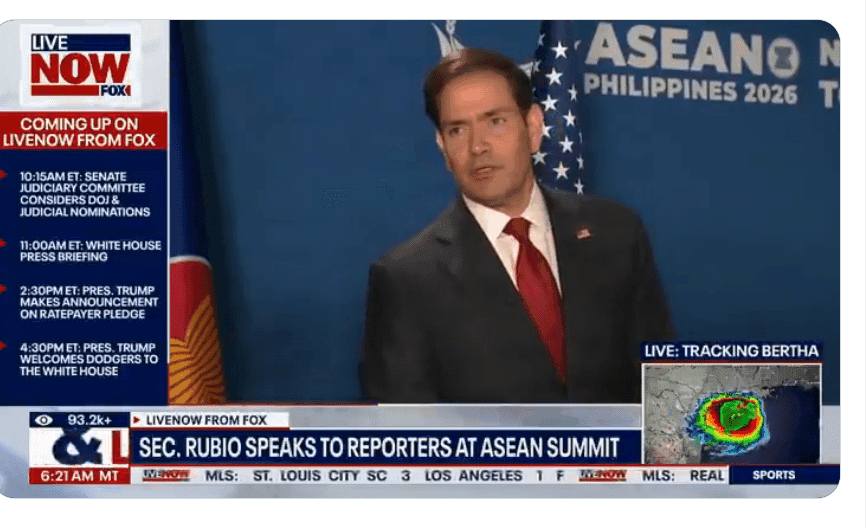
Photo via Mish Talk
The current administration has positioned itself as representing Christian values in its governance and decision-making, a framing that extends to its approach to Middle East policy and U.S.-Iran relations. According to observers, this religious identity shapes how officials articulate and justify their stance on regional security matters, invoking theological principles to explain strategic choices.
The invocation of religious doctrine in foreign policy debates reflects a broader pattern in which the administration grounds its positions in faith-based reasoning. This approach has drawn scrutiny from analysts who question whether theological frameworks provide adequate justification for escalatory military policies and whether such reasoning aligns with longstanding diplomatic and strategic principles.
The intersection of religion and foreign policy continues to generate debate over how faith-based perspectives should inform national security decisions. As the administration pursues its Iran strategy, observers are closely examining whether its stated Christian principles align with the practical implications of its regional policies.