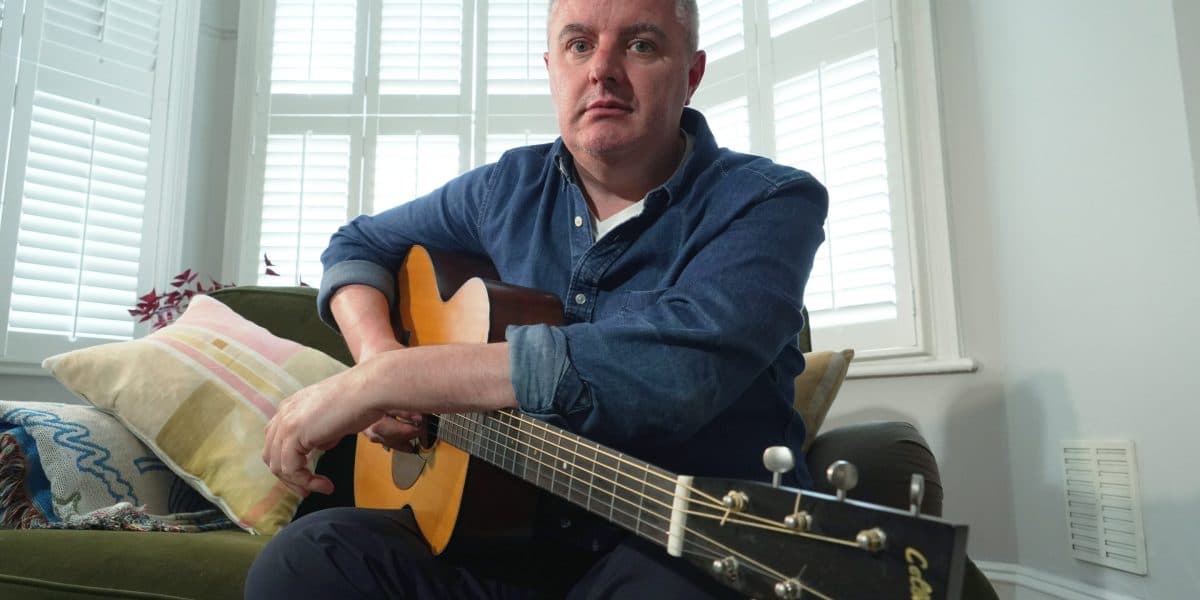
Photo via Fortune
Artificial intelligence is increasingly becoming a bridge for artists facing physical limitations. According to Fortune, Samuel Smith, a 49-year-old Americana songwriter based in London, has leveraged AI tools to continue his music career after Parkinson's disease significantly impaired his ability to play guitar. Smith's case illustrates how emerging technologies are creating new possibilities for creatives dealing with progressive neurological conditions.
Smith received his Parkinson's diagnosis in 2020, a condition that gradually affects motor control and coordination—critical abilities for guitar playing. Rather than abandoning his craft entirely, he turned to artificial intelligence to bridge the gap between his artistic vision and physical capability. The approach allowed him to complete and release his second album, 'The Art of Letting Go,' demonstrating that technology can serve as an essential accessibility tool in creative fields.
The intersection of healthcare challenges and technological innovation presents important considerations for Nashville's thriving music community. As the epicenter of the American music industry, Nashville is home to countless songwriters, session musicians, and performers who face their own health challenges. AI-assisted composition and performance tools could offer Nashville musicians and producers new pathways to maintain their careers when facing illness or injury.
While AI's role in music remains contentious within the industry—raising concerns about authenticity and artist displacement—stories like Smith's highlight its potential humanitarian applications. For musicians in Nashville and beyond who face degenerative conditions, adaptive AI tools represent not a threat to creativity, but a lifeline that preserves artistic voices and extends careers that might otherwise be cut short.