Photo via Bloomberg Markets
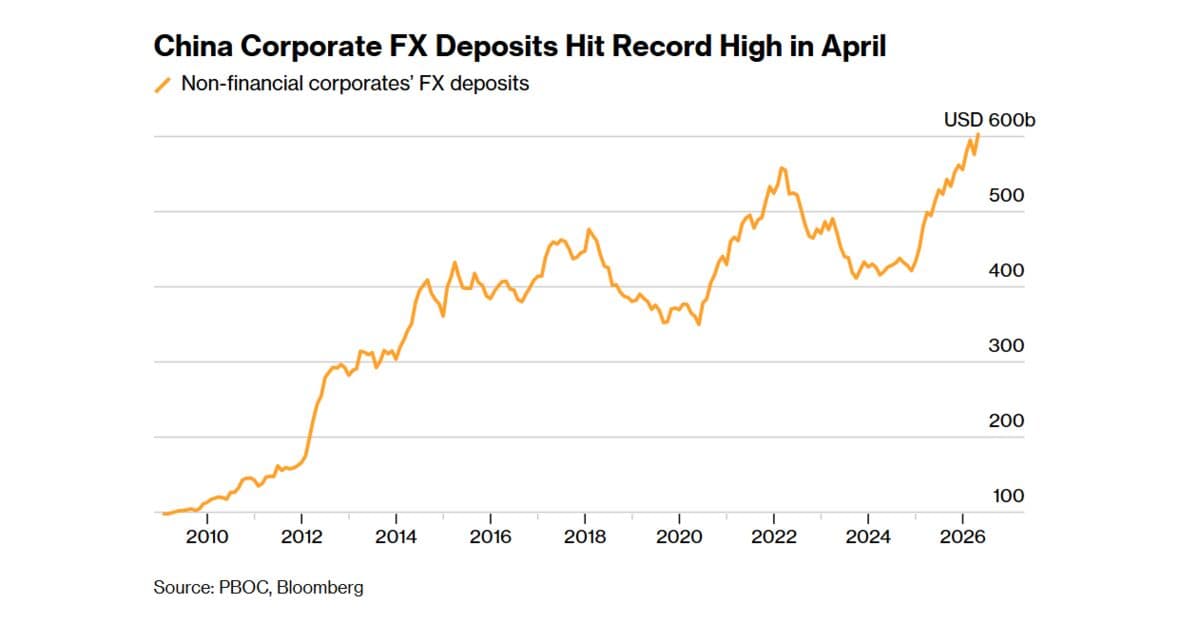
Chinese regulators have authorized select banks to raise interest rates on corporate US dollar deposits, according to Bloomberg Markets. The policy adjustment signals Beijing's effort to manage currency flows and influence corporate behavior regarding yuan conversion decisions.
The move appears designed to discourage rapid currency conversion from yuan to dollars, which has been accelerating as the yuan strengthened in recent months. By making dollar deposits more attractive through higher rates, Chinese policymakers hope to slow the pace of conversion activity and stabilize currency dynamics.
For Nashville-area businesses engaged in international trade or manufacturing partnerships with Chinese companies, this policy shift underscores the importance of monitoring currency management strategies. Companies with ongoing dollar-denominated contracts or investments in China may experience changes in how their Chinese counterparts approach foreign exchange positioning.
The policy reflects Beijing's broader effort to balance economic growth with currency stability. Businesses with cross-border operations should stay informed about evolving Chinese monetary policies, as such regulatory changes can influence pricing negotiations, investment returns, and working capital management for firms with significant Asian exposure.