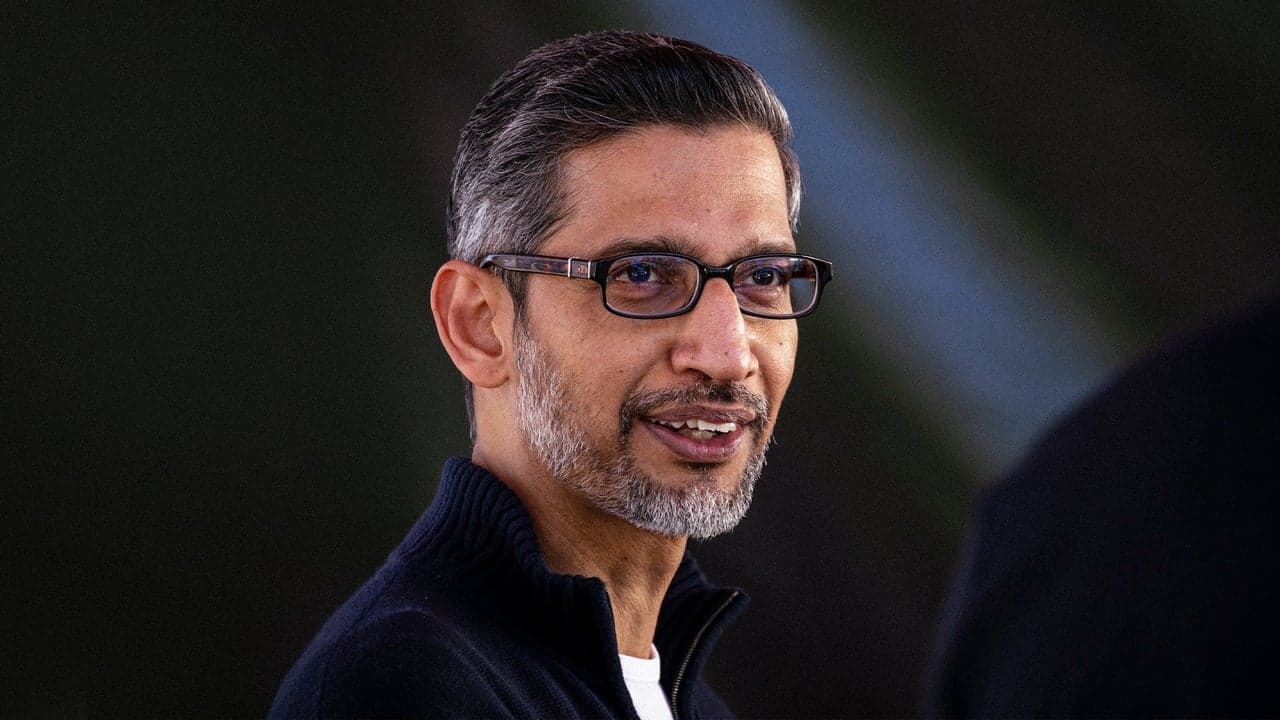
Photo via Fast Company
Google is undergoing significant organizational changes as artificial intelligence reshapes employee roles and responsibilities. According to reporting from Fast Company, software engineers at the company are transitioning from hands-on coding to directing AI agent teams, with 75% of Google's code now generated by AI. This shift reflects a broader transformation in how major technology companies are structuring their workforces to leverage AI capabilities.
During a recent interview, Google CEO Sundar Pichai downplayed concerns about AI replacing executive leadership, contending that the CEO role 'is not that complicated.' Pichai argued that AI excels at making rational, data-driven decisions on routine matters, allowing leaders to focus on consequential choices and maintaining organizational momentum. He compared the AI adoption curve to previous workplace innovations like spreadsheets—transformative technologies that took years to fully integrate but ultimately elevated operational capabilities.
While some Silicon Valley leaders are experimenting with radical organizational restructuring—including Jack Dorsey's proposal for thousands of direct reports—Pichai suggested Google will maintain traditional leadership structures given its scale. He emphasized that 'leaders and people are incredibly important,' particularly for complex, multi-product enterprises. This measured approach may offer insights for Nashville-area business leaders considering their own AI implementation strategies.
Pichai also acknowledged growing public concern about AI's economic impact, noting that the pace of technological change is unprecedented in human history. He stressed that artificial general intelligence—AI matching human cognitive capabilities—is approaching sooner than many expect, making workforce preparation and societal understanding critical priorities. For Nashville's business community, these remarks underscore the urgency of developing AI literacy and adaptation strategies across industries.