Photo via Bloomberg Markets
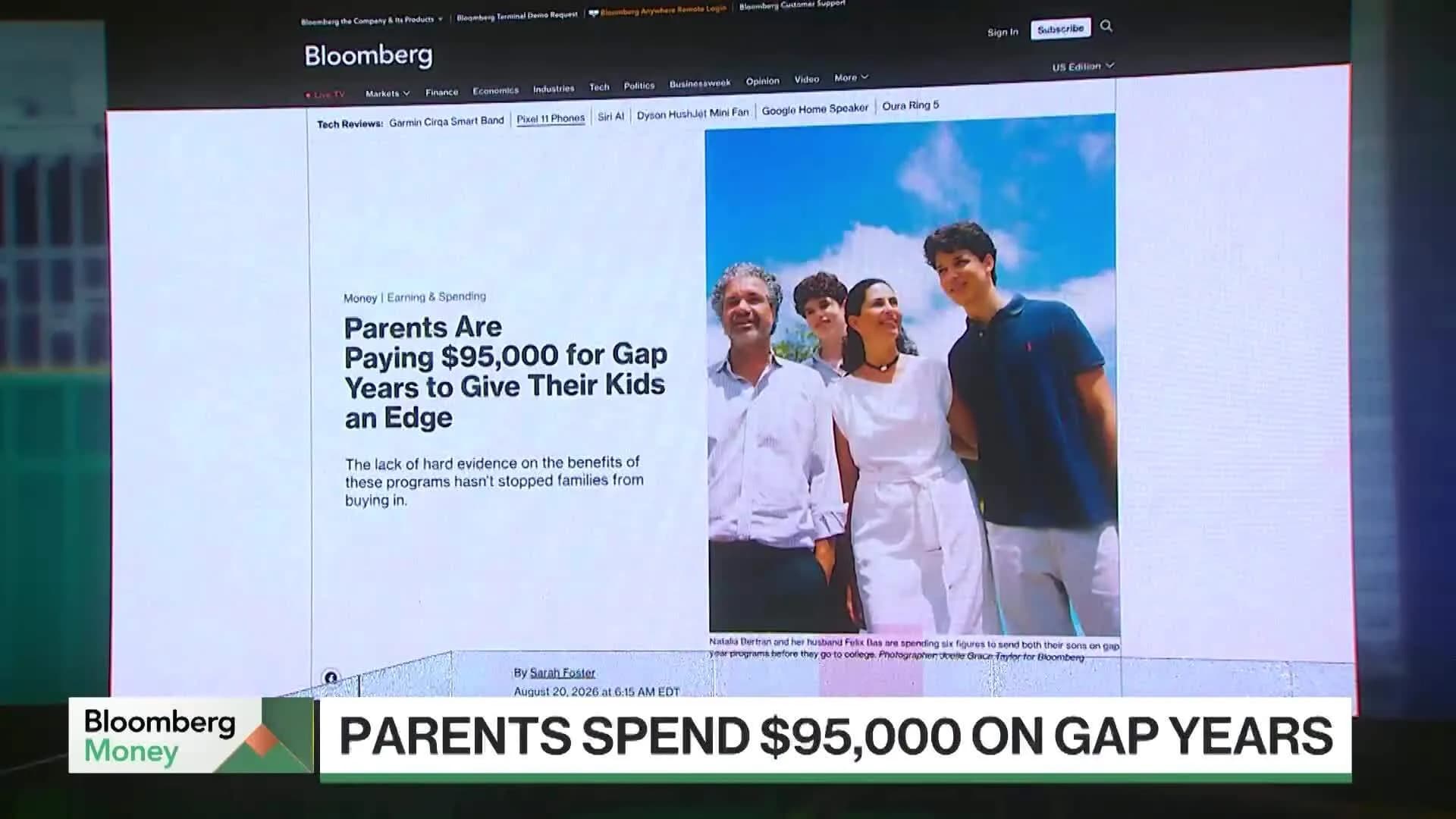
According to Bloomberg Markets reporting, gap-year programs are gaining traction among affluent families who view them as a critical investment in their children's competitive positioning. The average cost of premium gap-year experiences now rivals or exceeds annual tuition at many four-year universities, prompting broader questions about educational value and opportunity cost. Parents are increasingly willing to defer college enrollment in favor of structured travel, service learning, and professional development experiences they believe will differentiate their children in an increasingly crowded job market.
The shift reflects a fundamental reassessment of higher education's return on investment. As employers place greater emphasis on experiential skills, international exposure, and demonstrated maturity, families are hedging their bets by supplementing—or in some cases replacing—traditional academic pathways with personalized growth experiences. Industry observers note that gap-year providers have expanded significantly to meet this demand, offering curated programs that combine academic enrichment, entrepreneurial training, and cultural immersion.
This trend underscores evolving parental perspectives on what constitutes adequate preparation for adulthood and career success. Whether gap years represent genuine competitive advantage or reflect broader anxieties about educational equity and access remains subject to debate among education economists and career development experts.