Photo via Fortune
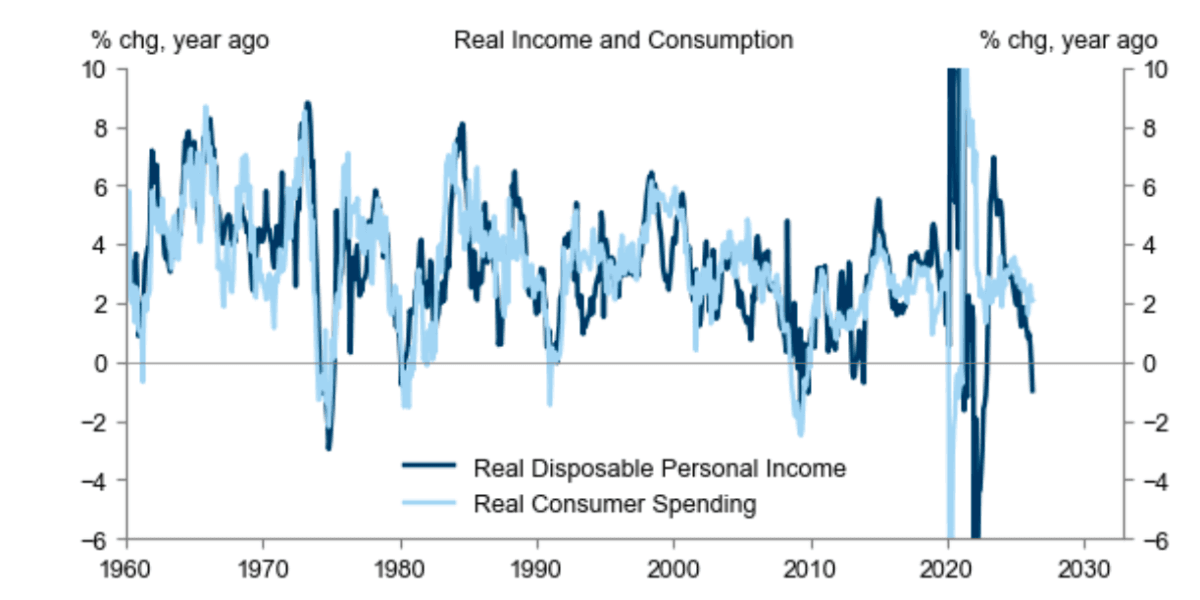
According to analysis from Goldman Sachs, real income growth in the United States has decelerated to levels typically associated with recessionary periods—yet the economy officially remains outside recession territory. This disconnect between nominal wage gains and actual purchasing power reveals a troubling trend for working Americans, including those across Nashville and Middle Tennessee. The divergence suggests that while some workers are receiving raises, inflation is eroding much of that gain, leaving families with less discretionary spending power than headline numbers might suggest.
For Nashville-area businesses spanning retail, hospitality, and professional services, this slowdown carries significant implications. Consumer spending remains a critical engine for the local economy, and reduced real incomes mean fewer dollars flowing through restaurants, shops, and entertainment venues that anchor Nashville's business community. Employers in the region may also face pressure as workers struggle to maintain their standard of living, potentially affecting retention rates and wage expectations.
The timing of this income squeeze creates urgency for Nashville business leaders and policymakers. Even without an official recession designation, the practical effect on household finances mirrors recessionary conditions, suggesting that regional companies should prepare for shifts in consumer behavior and employee needs. Human resources professionals particularly should monitor these trends as workers increasingly prioritize compensation and benefits that address cost-of-living concerns.
As Nashville continues attracting new residents and businesses, understanding these wage dynamics becomes essential for long-term workforce planning and economic development strategies. Local business leaders would be wise to assess how income pressures among employees and consumers might reshape demand for goods and services, and to position their organizations accordingly for what could be an extended period of constrained real wage growth.