Photo via FreightWaves
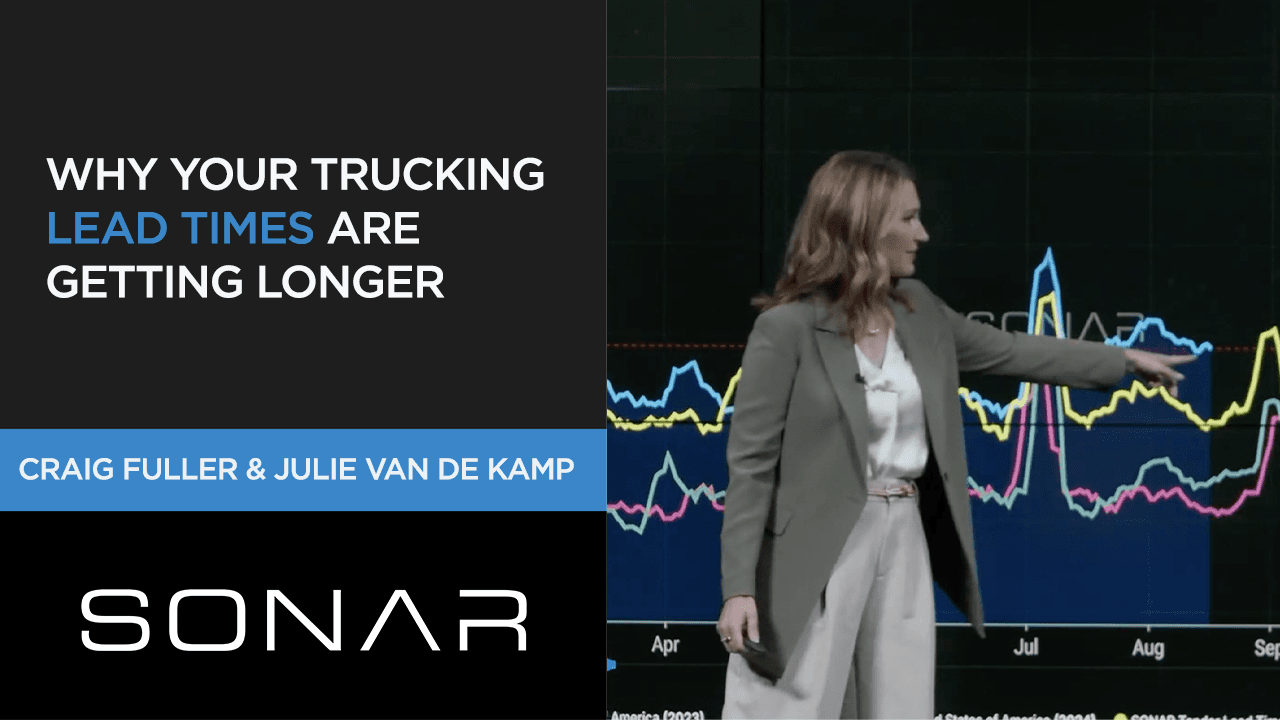
According to FreightWaves SONAR data, trucking tender lead times are expanding beyond historical norms, even as the industry typically experiences seasonal softness. The trend defies conventional expectations that slower periods would accelerate freight matching and reduce acceptance wait times. This counterintuitive pattern points to structural shifts in carrier availability and market dynamics that warrant attention from logistics professionals.
The extended lead times reflect what analysts characterize as an 'orderly tightness' in the freight market—a condition where capacity remains constrained despite modest demand fluctuations. Key markets including St. Louis and Atlanta are experiencing pronounced delays in tender acceptance, suggesting that regional imbalances in supply and demand are limiting shipper options. For brokers and carriers managing loads, longer lead times translate to tighter scheduling windows and reduced operational flexibility.
Industry observers point to the persistence of capacity constraints as a defining feature of the current freight environment. Understanding these tender dynamics has become essential for shippers seeking to maintain reliable pickup schedules and for brokers navigating margin pressures. As lead times remain elevated, stakeholders are reassessing their network strategies and capacity planning approaches to adapt to the new normal in trucking logistics.