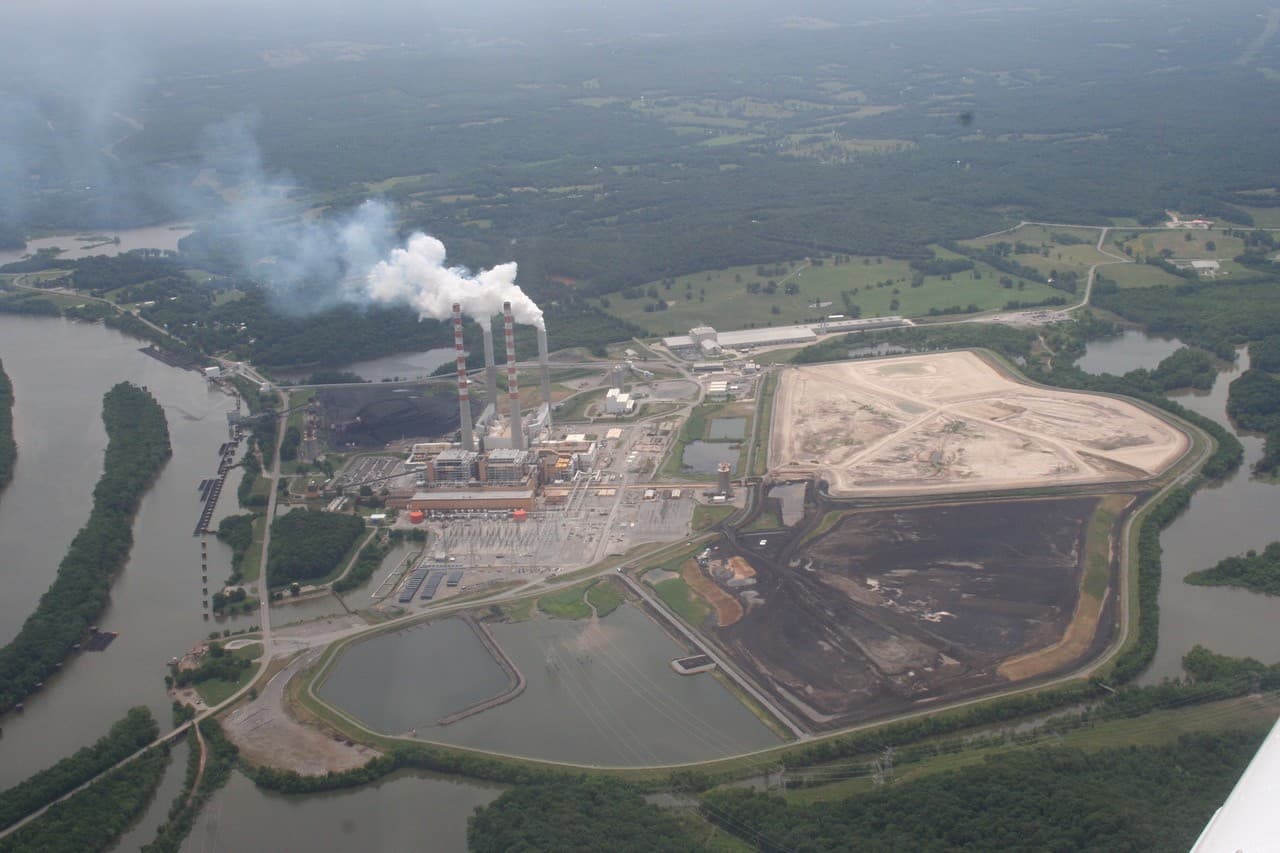
Photo via WPLN Nashville NPR
The Tennessee Valley Authority faces mounting pressure over its environmental stewardship following a proposal to permanently cap coal ash storage at the Cumberland Fossil Plant in Stewart County, located approximately 60 miles northwest of Nashville. Rather than transferring the accumulated ash to a lined landfill—the standard practice for hazardous waste containment—the TVA has chosen an in-place capping strategy that environmental advocates argue could compromise regional water quality indefinitely.
The Cumberland facility represents Tennessee's largest coal ash storage site, making decisions about its management particularly consequential for Middle Tennessee businesses and residents who depend on clean water resources. According to reporting from WPLN Nashville NPR, the unlined storage site poses contamination risks to the Cumberland River system, which supplies water to communities across the region and supports industries reliant on reliable water access.
The proposed capping approach differs significantly from industry best practices for coal ash disposal. By leaving ash in place rather than relocating it to properly lined facilities, the TVA's plan essentially accepts ongoing leaching of contaminants into groundwater and surface water—a decision that prioritizes cost savings over environmental remediation and could create liability issues for affected stakeholders.
Nashville-area business leaders, particularly those in water-dependent sectors such as manufacturing, hospitality, and food service, should monitor this regulatory decision closely. The outcome will influence both environmental compliance costs and long-term operational risks for companies relying on Cumberland River water resources, making this a business issue extending well beyond energy policy discussions.