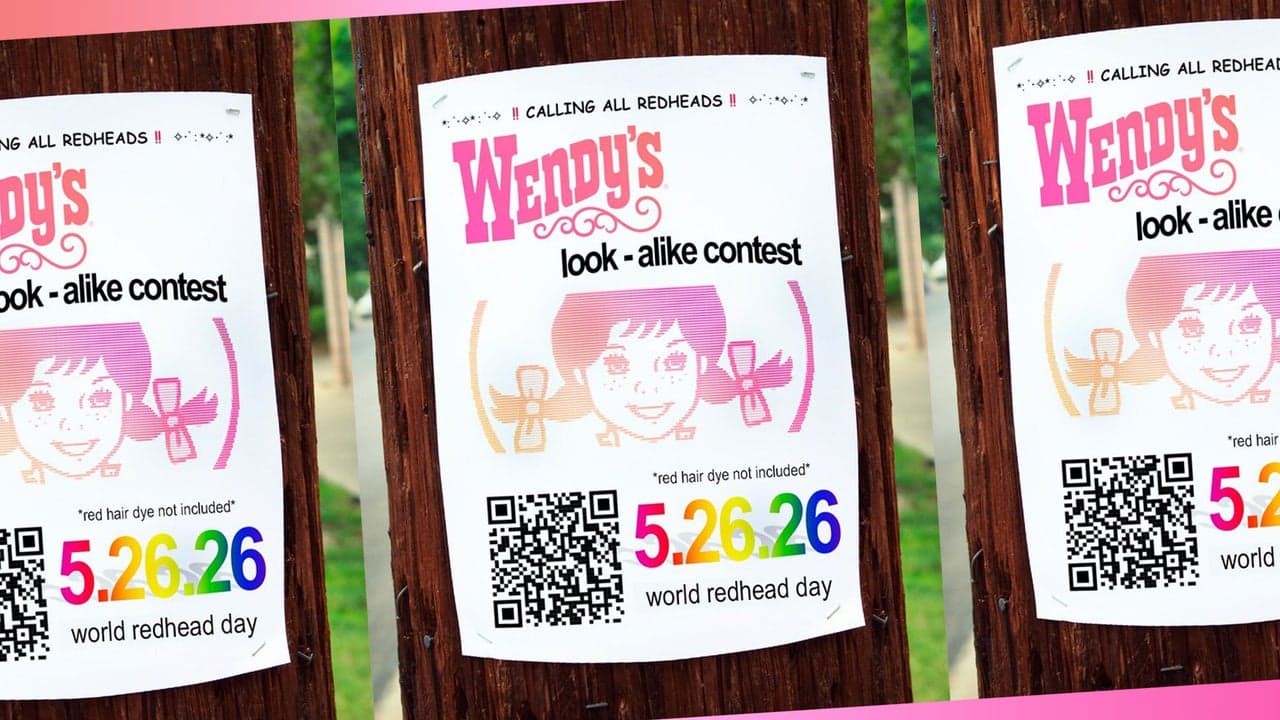
Photo via Fast Company
Wendy's is joining the growing list of major brands capitalizing on celebrity and character look-alike contests, announcing a competition centered on its iconic redheaded mascot ahead of World Redhead Day on May 26. The contest, set to take place in New York City's Financial District, will award the grand prize winner with free hamburgers for an entire year. According to Fast Company, participants must be 18 or older and will compete across three rounds, including a social media challenge and the creation of an original Wendy's commercial.
The promotion underscores how major quick-service restaurant chains are increasingly using experiential marketing and social media trends to connect with younger audiences. Wendy's has built a reputation for witty, trend-responsive social media engagement—a strategy that has generally resonated with consumers seeking brands with personality. The look-alike contest format has gained significant momentum over the past two years, with similar campaigns run for celebrities like Timothée Chalamet and Harry Styles.
However, Wendy's recent social media missteps reveal the double-edged sword of aggressive brand voice tactics. In April 2025, the chain faced widespread backlash after making controversial comments about singer Katy Perry's return from a Blue Origin space flight, prompting a public apology and statement emphasizing the brand's respect for the entertainer. For Nashville-area franchisees and marketing professionals, the incident illustrates how quickly social media momentum can shift when brand tone crosses from clever to offensive.
The World Redhead Day contest appears designed partly to rehabilitate Wendy's social media presence following the controversy. By focusing on brand heritage—tying the campaign to founder Dave Thomas's daughter, who inspired the original mascot—Wendy's is pivoting toward a more celebratory, inclusive marketing angle. The strategy reflects broader industry trends among restaurant chains seeking to balance viral appeal with corporate responsibility, a consideration increasingly important to regional operators managing brand reputation in their local markets.