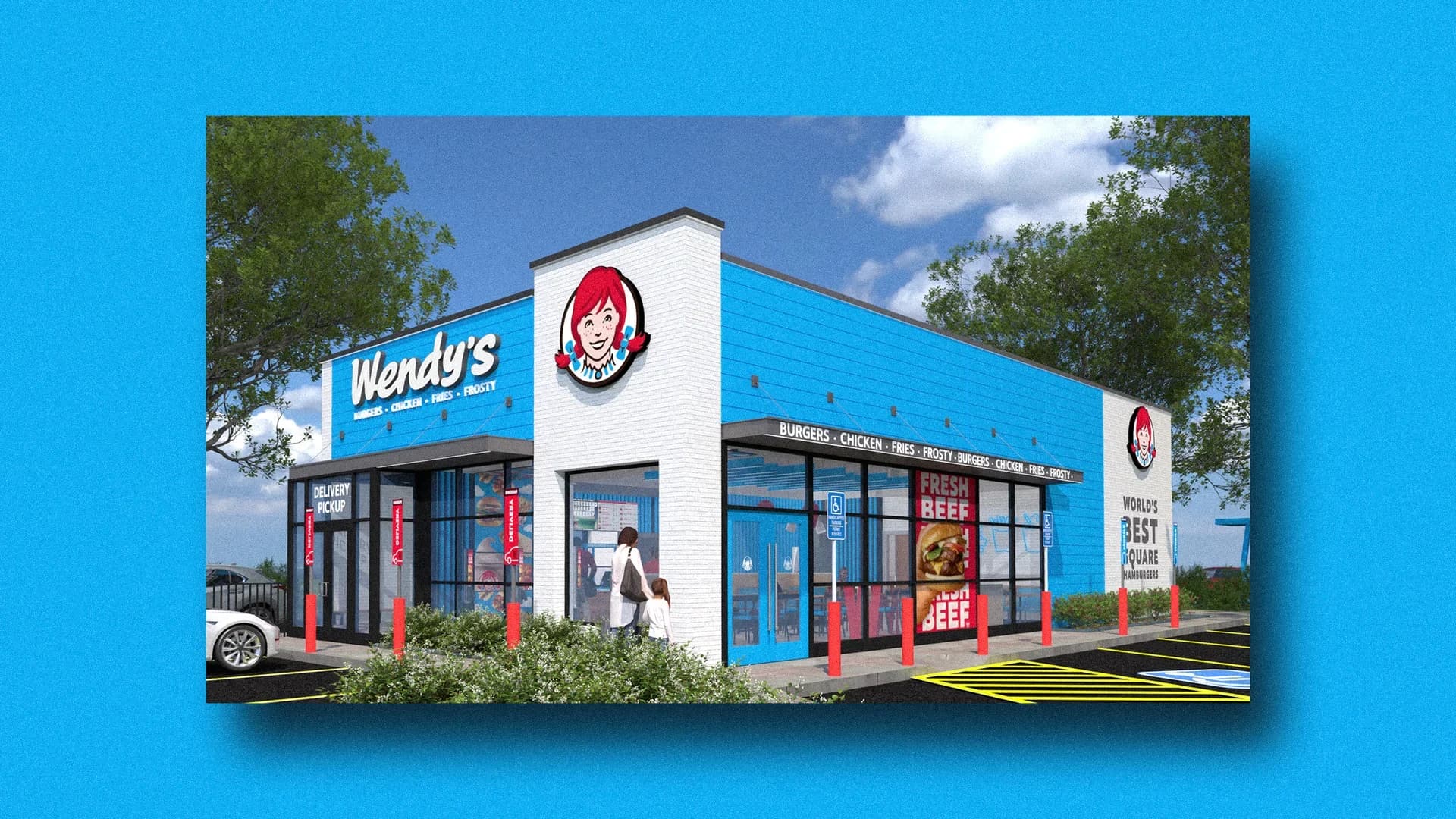
Photo via Inc.
Wendy's is challenging a fundamental principle of food service branding by permitting international franchisees to redesign their restaurants in light blue rather than the chain's iconic red. According to Inc., this strategic shift represents a deliberate visual cue to communicate the availability of digital ordering options and modern technology integration to customers.
The color change raises important questions about brand consistency and consumer psychology in the quick-service restaurant sector. Traditionally, warm colors like red have dominated fast-food branding because research suggests they stimulate appetite and create a sense of urgency—principles that have guided the industry for decades. By introducing cool blue tones, Wendy's is testing whether modern consumer preferences for technology and convenience can override these long-established design conventions.
For Nashville-area franchise operators and entrepreneurs considering QSR ventures, this development underscores the evolving relationship between physical restaurant design and digital customer experience. As consumers increasingly expect seamless ordering through mobile apps and kiosks, brands must decide whether their visual identity should evolve to reinforce these capabilities or maintain traditional aesthetics.
The success or failure of this international experiment could influence how other major chains approach their restaurant design strategies. If light blue proves effective in signaling digital offerings without diminishing appetite appeal or brand recognition, it may establish a new visual language for technology-forward quick-service establishments across multiple markets and regions.