Photo via Fast Company
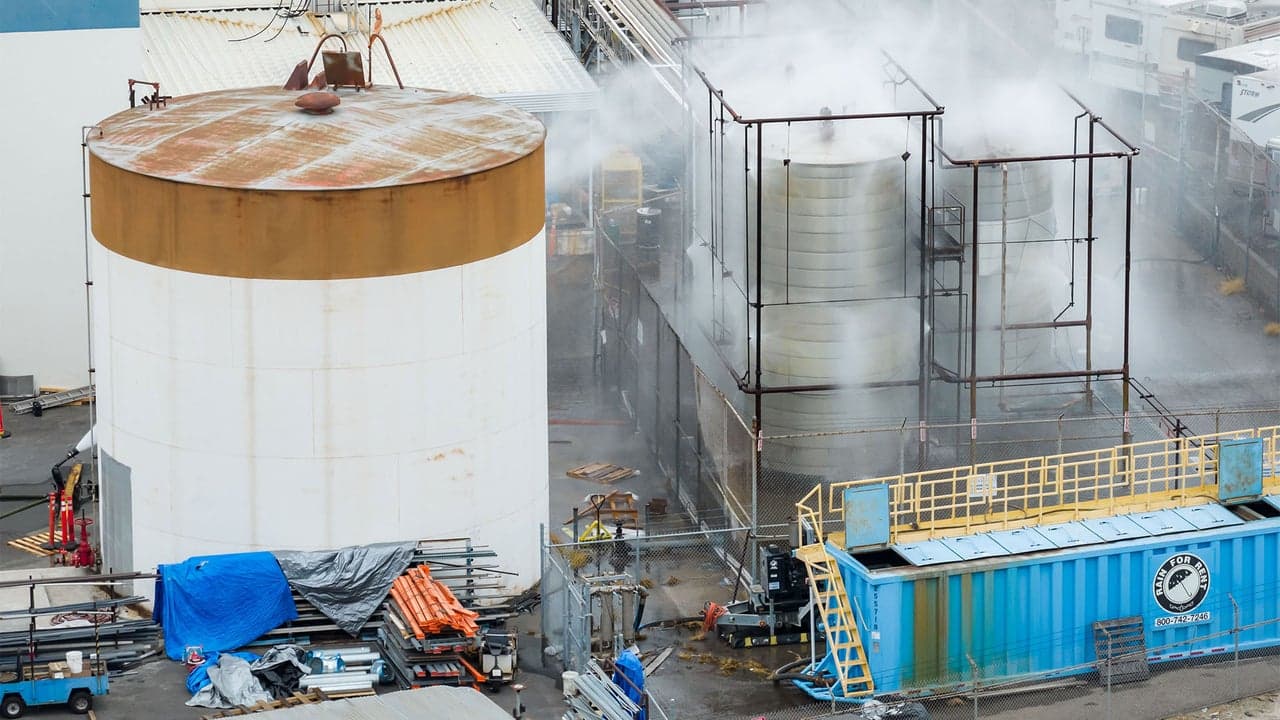
A methyl methacrylate storage tank at an aerospace parts manufacturer in Southern California overheated Thursday, triggering the evacuation of 50,000 residents and sparking concerns about industrial chemical safety protocols. The incident at GKN Aerospace Transparency Systems, which supplies components for commercial and military aircraft, demonstrates how quickly a facility malfunction can escalate into a public health emergency affecting tens of thousands of people.
Emergency responders deployed cooling measures and continuous atmospheric monitoring to prevent potential explosion, with a crack discovered in the tank over the weekend offering some relief by allowing pressure to dissipate. According to engineering experts, the strategy mirrors a simple principle: much like a punctured soda can won't explode in a hot car, the crack reduced catastrophic risk by releasing internal pressure rather than allowing it to build toward detonation.
GKN Aerospace disclosed it had recently settled violations with state regulators for over $900,000 related to recordkeeping, permitting issues, and emissions violations. The settlement and subsequent crisis raise questions about facility inspection frequencies and compliance enforcement—issues that resonate with industrial operators across all regions managing hazardous materials storage.
Displaced residents have filed class-action litigation, with lawyers arguing that property values will suffer regardless of the immediate outcome. For businesses nationwide relying on chemical storage and processing, the incident underscores the financial and reputational exposure linked to facility management lapses and serves as a cautionary tale about the importance of preventive maintenance and transparent regulatory compliance.