Photo via FreightWaves
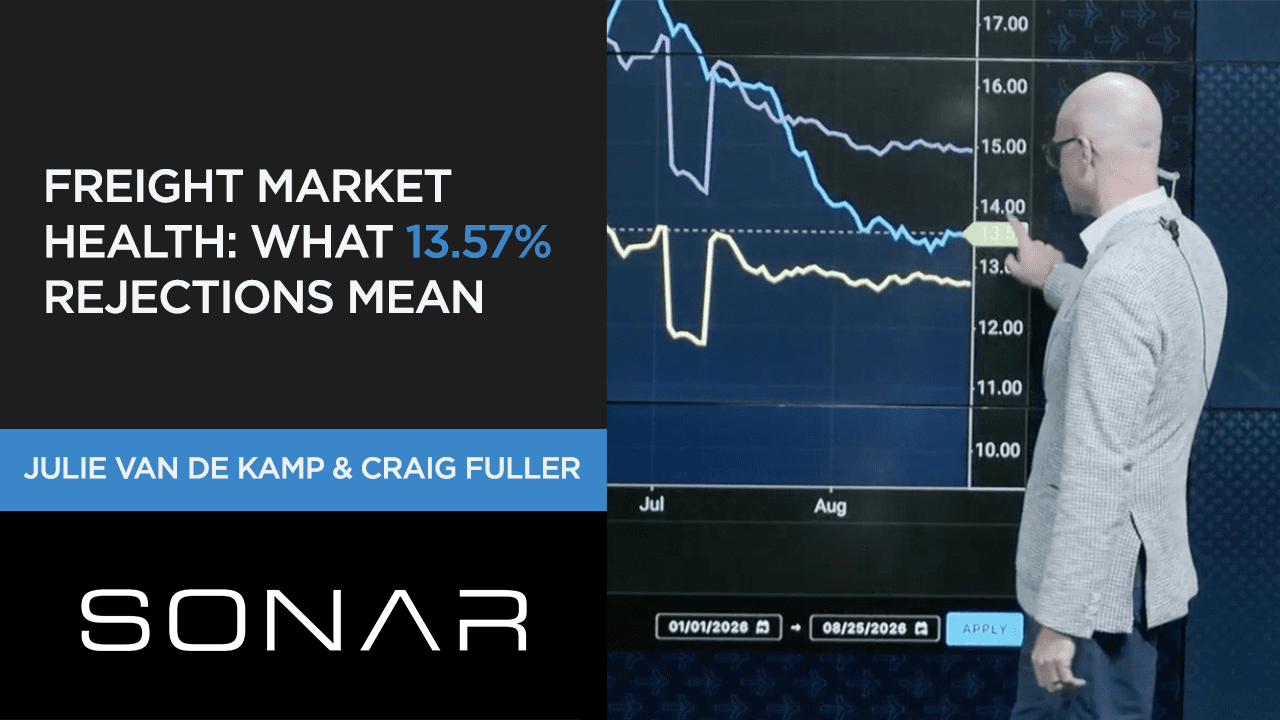
The freight market is showing signs of stabilization, with tender rejection rates holding at 13.57%, according to FreightWaves data. This metric—which measures the percentage of freight loads rejected by carriers—represents a period of relative equilibrium between supply and demand in the trucking sector. While some industry observers characterize this level as a healthy baseline for the market, experts caution that apparent stability can mask underlying pressures building beneath the surface.
FreightWaves analysts point to seasonal dynamics as a key driver of near-term conditions, noting that the freight sector typically experiences heightened volatility as it approaches the critical fourth quarter. Shippers and carriers should prepare for potential disruptions as peak shipping season intensifies, with demand surges potentially straining capacity and pushing rejection rates higher. The stable current environment presents an opportunity for market participants to secure capacity and adjust operations before conditions tighten.
For shippers, the current rejection rate underscores the importance of proactive planning and maintaining strong carrier relationships. Carriers, meanwhile, face decisions about equipment and staffing levels ahead of anticipated seasonal surges. Industry participants monitoring tender rejection rates—a widely tracked barometer of freight market health—should remain vigilant for signs of deterioration as economic and seasonal factors converge in the coming weeks.