Photo via Fast Company
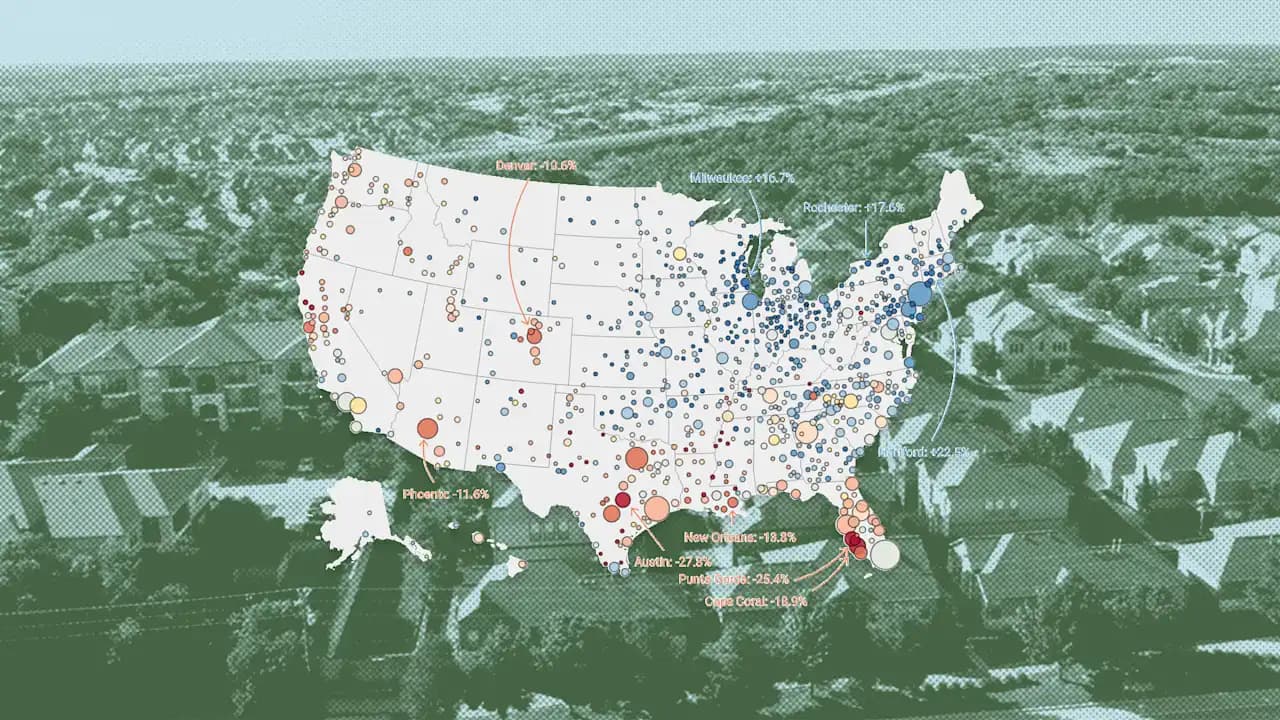
The rapid cooling in once-scorching housing markets offers important lessons for real estate professionals and business leaders tracking residential investment trends. According to analysis by ResiClub, fifteen of America's largest metro areas have experienced home price declines of at least 10% from their 2022 peaks, with Austin leading the way at -27.8%. These markets, concentrated in the South and Mountain West, had experienced explosive pandemic-era growth—some rising over 70% between March 2020 and mid-2022—that far outpaced local income growth and fundamentals.
The correction reveals a critical mismatch that plagued overheated markets. During the pandemic boom, remote work, low interest rates, and stimulus spending created demand that construction couldn't match; the Federal Reserve estimated new housing would have needed to increase by 300% to meet the surge. Once mortgage rates spiked in 2022 and pandemic-driven migration patterns reversed, these oversized prices became unsustainable. Markets like Punta Gorda, Florida and Austin, Texas found themselves unable to support values that had stretched far beyond what local incomes could justify.
Builder incentives are now reshaping the competitive landscape in these correcting markets. As developers offer discounts and concessions to maintain sales velocity across the Sunbelt's abundant new construction pipeline, buyers are shifting from resale properties to new homes with negotiated deals. This dynamic creates a cascade effect, cooling prices in both new and existing home segments. In contrast, Northeast and Midwest markets with tighter inventory and less pandemic-driven overvaluation have experienced more stability, suggesting regional variations will persist as the market recalibrates.
For Nashville-area business stakeholders, the national correction underscores the importance of monitoring local market fundamentals against national trends. While Middle Tennessee avoided the most extreme pandemic speculation seen in markets like Austin and South Florida, understanding how overvaluation correlates with price corrections—and how regional builder activity influences inventory—remains critical for real estate investors, developers, and corporate relocation decisions.