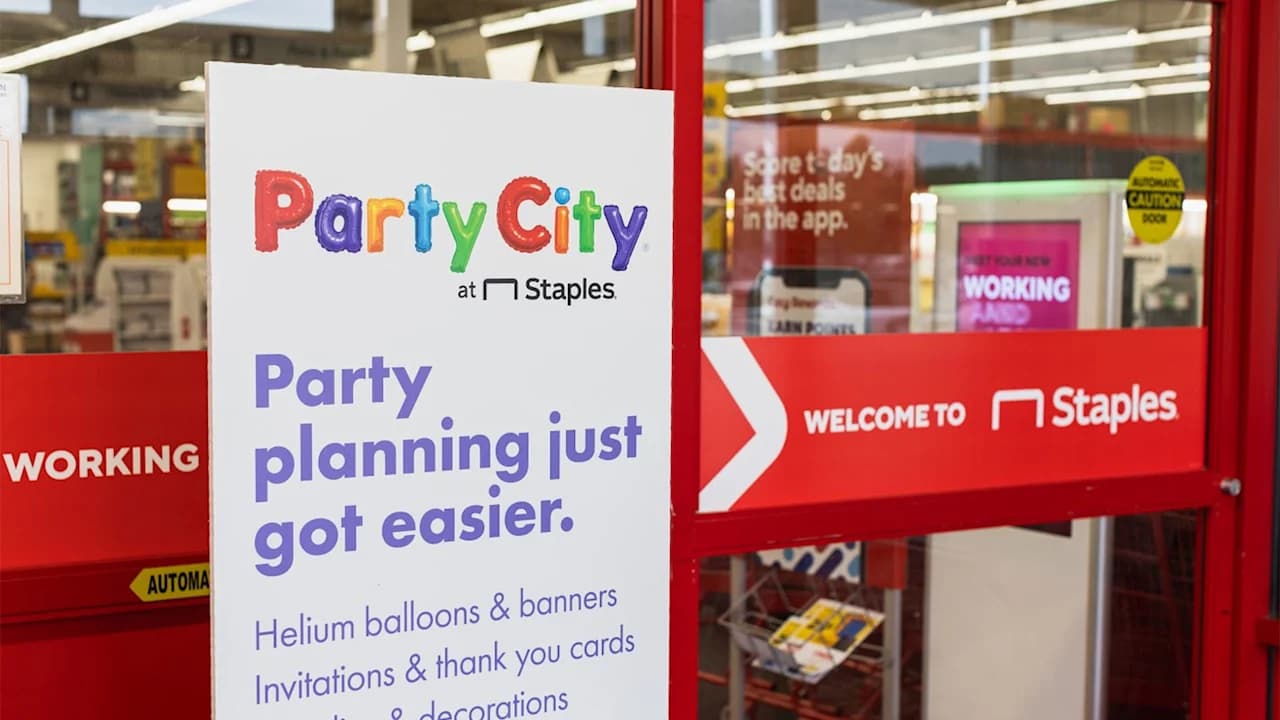
Photo via Fast Company
Staples is making a strategic move to combat declining retail traffic by integrating Party City shop-in-shop experiences into more than 700 of its locations across 34 states. The partnership, announced in late April, represents a creative approach to cross-merchandising that could serve as a model for struggling brick-and-mortar retailers looking to diversify their in-store offerings. For Nashville-area shoppers and small business owners, this expansion means access to consolidated services—party planning alongside professional print and marketing solutions—all in one location.
The collaboration addresses challenges both retailers have faced in recent years. According to Fast Company, Staples has been downsizing its U.S. footprint to under 1,000 stores while shifting focus toward e-commerce and B2B services. Party City's situation has been more dire, filing for bankruptcy twice and announcing plans to close all standalone locations. By embedding Party City within Staples stores, the partnership provides a lifeline for the party supply brand while giving Staples new reasons for customers to visit physical locations.
The integrated offering combines Staples' core strengths—same-day printing, custom invitations, banners, and marketing materials—with Party City's party supplies and helium balloon services. This bundled approach addresses a genuine market need, particularly among local event planners, corporate offices planning celebrations, and families preparing for graduations and milestone events. The availability of Party City products on Staples.com extends the partnership's reach beyond physical stores.
Staples' social media strategy is also evolving alongside this retail innovation. Employee Kaeden Rowland, known as the "Staples Baddie," has leveraged TikTok to highlight lesser-known products and services, amassing nearly 600,000 followers. The company has embraced this grassroots marketing approach through paid partnerships, with Rowland among the first to announce the Party City collaboration to her audience. This blend of traditional retail adaptation and modern social commerce demonstrates how established retailers are experimenting with new channels to remain relevant with younger consumers.